

I don’t know how to tell you this but according to this tech whistleblower AI could wipe out humanity.
Yes, some nice light reading for the morning.
And maybe it’s just me but it honestly seems like every month an ex AI employee storms out to reveal the truth that the robots are indeed coming to get us.
And the internet definitely had some thoughts on this.
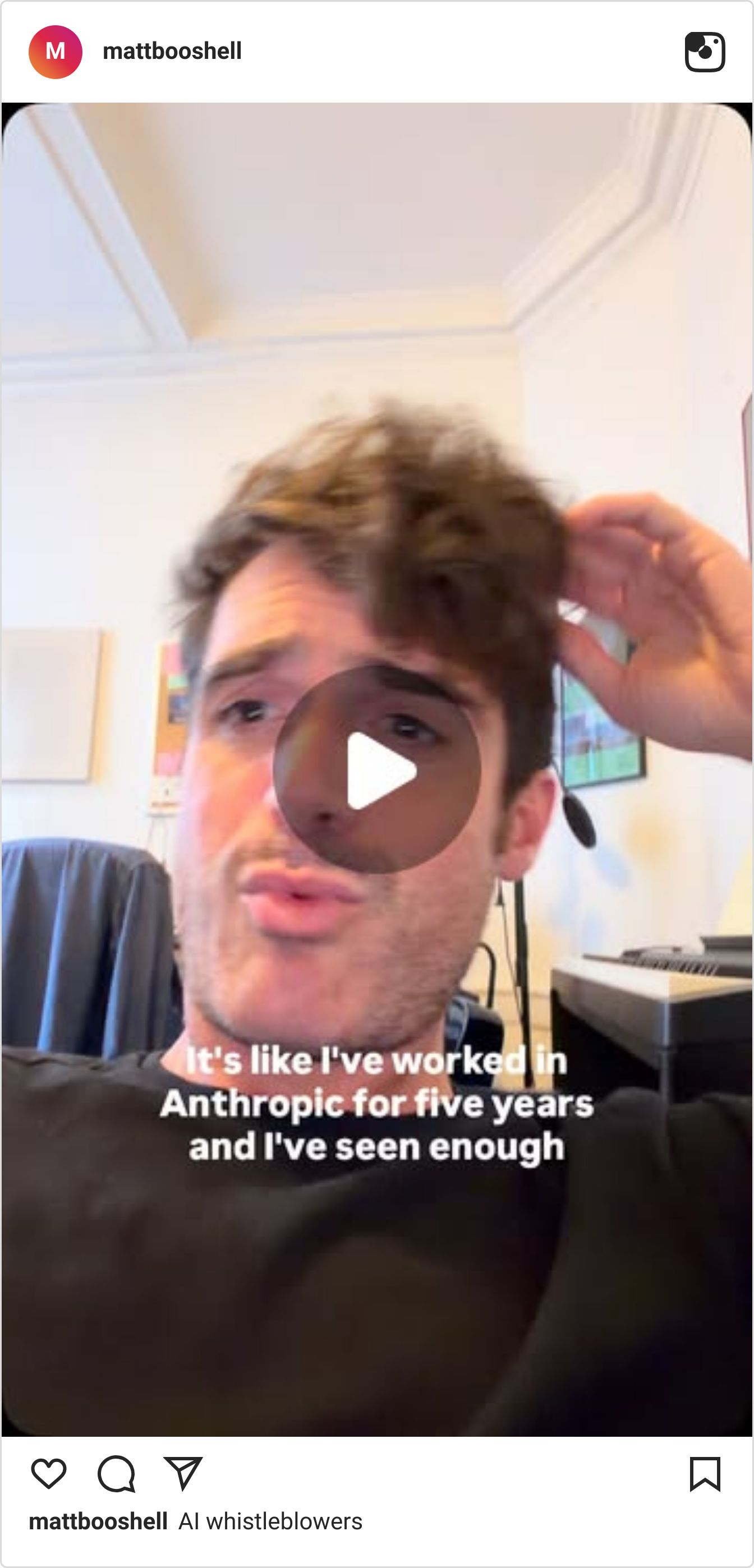
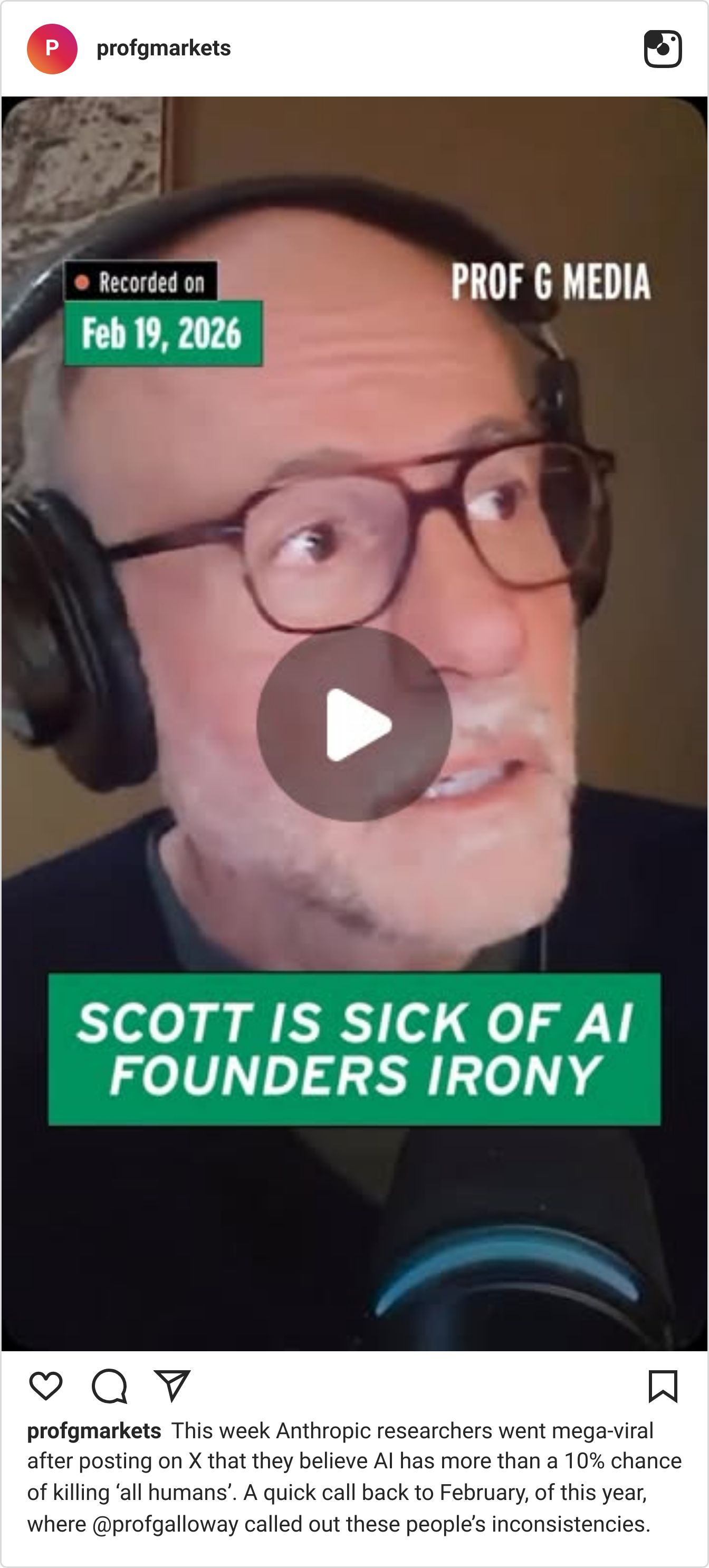
I watched I-robot with our once beloved now cancelled Will Smith and from what I remember the robots looked pretty scary!
But back to the AI whistleblower.
His name is Jacob Coxon’s and in his very public resignation on X he argued that he can’t keep working for companies “gambling with our lives”.
According to the Guardian, His colleagues, Coxon said, talk routinely about the “endgame” or the “crunch time”, meaning that what they do in the next year or two will decide the fate of humanity. This is pretty serious stuff, what he describes is an industry now practically begging to be saved from itself.
Yikes.
You can read more about this in this guardian piece.
But I wanted to talk to an actual AI expert and ask her everything we need to know about its impact on jobs, our lives, our privacy. I want to be honest that this interview was done before the whistleblowing piece came out last week.
However the questions are still very relevant to this community. Because whether we like it or not. AI is here to stay and so we need to understand more about it.
So I’d love to introduce you to the wonderful Sonia Qurashi who is the founder of The AI Lab.

I’m telling you this woman is a bad ass! She helps professionals and organisations use AI in a practical, human-centered way and has a master's in Cognitive Science and Artificial Intelligence and also has a background in tech consulting.
And so without further ado, let’s get into the interview (oh that rhymes).
You studied Cognitive Science & AI, quit corporate and became an AI educator. Was it because everyone was talking about AI and you saw $$$$? (I know a cheeky question but I had to ask!)
Definitely not the money. When I started studying AI, most people had no idea what it was. I regularly had to explain what I was actually studying. My interest started in 2015 during my bachelor thesis internship at KLM. After finishing my studies I started working at a bank as a financial analyst, but I kept thinking about connecting those dots through data. Six months in I knew it wasn't right for me, so I quit and went back to university to study Data Science. During that premaster a professor gave a lecture on machine learning and artificial intelligence, and I was hooked. I grew up loving The Matrix, and the idea of actually studying how far we can go in mimicking human intelligence felt like the most exciting thing I could do. So I decided to pursue a master in Cognitive Science and Artificial Intelligence. Later, working as a consultant, I kept seeing the same gap: companies investing heavily in technically impressive tools that users barely touched. I never wanted to be the developer, I wanted to be the bridge between the technology and the people using it. When ChatGPT launched in 2022 and AI suddenly became tangible for everyone, that bridge became my job. I started teaching people how to use it responsibly and effectively, and that's how I became an AI educator.
Reese Witherspoon came under fire for urging women to embrace AI. What are you really seeing when it comes to women and AI?
@reesewitherspoon Well…I’ve decided it’s TIME. The AI revolution has begun, and I need to learn as much as I possibly can about AI and share it with all of ... See more
What struck me about that whole discussion is that both sides are right, and that's exactly the point. The concerns in the backlash are legitimate. I've spent my academic career on the ethical side of AI, and questions about copyright, environmental impact and who actually benefits deserve serious answers. But opting out on principle doesn't solve any of those problems. It just means fewer women at the table where these systems are being shaped. I've worked in tech for the past ten years, and women are still heavily underrepresented. When a woman does step in, there's often this subtle vibe of "you probably won't get it." I've felt it myself. So my message is different from the fear framing of "don't get left behind." It's this: understanding AI is not the same as endorsing everything about it. Right now the race is all about what's technically possible, and far too little about whether these systems actually serve people well. The people with the strongest concerns are exactly the ones we need in the room.
OK so imagine this scenario, I work my 9-5, find AI overwhelming, use a few prompts but not much more. What could happen to my career over the next 5-10 years?
First, let me take some pressure off: nothing dramatic happens overnight, and you don't need to become a technical person. But the honest answer is that the gap does grow quietly. It won't be AI replacing you, it will be the difference between colleagues who have learned to delegate parts of their work to AI and those doing everything the old way. Over the years that difference compounds: in speed, in the quality of your output, and in the kind of work you get trusted with. The encouraging part is that closing that gap doesn't require a career switch or a course in programming. It starts with using AI on your own actual work, a little bit every week, with curiosity instead of overwhelm. The people who do that consistently are the ones who will look back in five years and wonder what they were so worried about.
Mel Robbins came under fire for telling followers to share their financial details with AI. From a safety perspective, what should we not be sharing and how can we protect ourselves?
The backlash was partly justified, but the nuance matters. Uploading your complete financial documents, with account numbers, ID details and all, to a consumer AI tool is not a great idea by default. My rule of thumb: never share anything you wouldn't want to appear somewhere else. That means no passwords, no ID or social security numbers, no full account details, and be careful with anything that identifies you or others personally. Also take two minutes to check your settings: most AI tools let you turn off the use of your conversations for training, and that toggle is worth knowing. But here's the nuance: the underlying idea of using AI as a thinking partner for your finances is actually not crazy at all. If you strip out identifying details and work with rounded numbers, "I earn X, my fixed costs are Y, help me think through my savings plan," you get a lot of the value with very little of the risk. Safety with AI isn't about avoidance, it's about knowing what you're sharing and with whom.
A lot of our readers feel unfulfilled in their jobs and would love to quit and do their own thing. How could AI make this transition less daunting?
I wish this had existed when I started my first business. So much of what makes starting out scary isn't the idea itself, it's everything around it: writing your first proposal, figuring out your pricing, setting up a simple website, the admin, the contracts. Those used to be things you either had to learn slowly or pay someone for. Today AI lowers almost all of those practical barriers. You have a sparring partner available at 11pm when you're doubting your rates, a first draft of your terms and conditions in minutes, a website text you can refine instead of staring at a blank page. What I do want to be honest about: AI removes the friction, not the leap. It won't make the decision for you, and it won't replace the courage it takes to say "these people are paying me as a professional" that first time. But it does mean you no longer need a whole team or a perfect plan to start. You can begin smaller, cheaper and faster than any generation before us.
Sonia and I want to do part 2 interview but this time using your specific questions. So if you have any questions about AI, the whistleblower, your career, using it in your business, reply to this email and send them to me and I will make sure they are featured in the next Q&A.
That’s it for this week folks.
Are you enjoying this newsletter?
Help us spread the word and share with your bestest girlfriends. They need this too!
See you next week!
What do you think about this newsletter?
DISCLAIMER: None of this is financial or legal advice and we are not certified financial advisers or lawyers! This newsletter is strictly educational. Please consult with an independent financial advisor or lawyer for advice on your specific circumstances.
